Welcome to Miscellanea- a biweekly newsletter at the intersection of content strategy, tech, and culture and how they influence each other. In this edition, I discuss the importance of personal websites, plus book recommendations and a LOTR explainer.
Édition n° 10. Date: 6 July 2026
If you like this newsletter, please forward it to a friend. You can sign up here.
In our age of social profiles, Substack, Beehiiv, and Canva pages, you’ll think a personal website doesn’t make sense, right? You just need a newsletter on Substack and the links on Linktree.
I think now it’s more important than ever to have your own digital home, a place you can control and customise.
Platforms appear and disappear constantly. Or they get flooded with AI slop, and their algorithms change in a way that you can no longer see your friends' posts. Do you remember the link aggregator Artefact, created by Instagram's founders? Yeah, bought and integrated into Yahoo News. Tinyletter, a nice newsletter engine, was bought by Twitter and disappeared into its systems.
Let’s look at why a personal website is your way to make sure other platforms don’t decide for you what happens with your digital footprint.
One of the most important motives for having a website is independence. You can download a full archive of it, you can change the hosting provider, even to another country. My websites and this newsletter are hosted in Switzerland, on a server powered by green energy. Another angle of independence is that you control how the information is organised and presented. No more suggestions and algorithmic feeds.
Having your website, you are digitally resilient. What does this mean? If a platform closes, gets acquired, or change their Terms and Conditions, your website is not affected. At the same time, you have an archive of your work, articles, or photos.
It’s personal. A website can be edited in a way that reflects your personality. You can choose the fonts and colours, add custom images, and create an Information Architecture to reflect what you want to showcase. That can be a bookmarks page, a blogroll, a photo feed, or a page with what you are reading or watching.
Probably the most important motive is that a website will help you be more discoverable. People can search for your name, and with the right SEO setup, your website can appear on the first page. Imagine someone discovers you through a social post or a mention in an article. Where do they go next? In an ideal scenario, directly to your website, where they can better understand what you do and who you are.
In the end, a personal website is an opportunity to get discovered, to consolidate your brand, and add legitimacy to your work. Every website visit can translate to future jobs, conference invitations, and even new friends.
Currently reading
I’ve always been curious about what is published and translated by European publishing houses. So, I subscribed to newsletters and RSS feeds and started curating new releases. This is the first selection for The European Books Bulletin.
Patti Smith’s new memoir, Bread of Angels (Random House, 2025), was translated last year into Italian, followed this year by the Romanian and French translations. The English cover is a photograph taken by Robert Mapplethorpe.
A new biography of Thomas Mann written by Florian Illies, “the great storyteller” (Süddeutsche Zeitung), is published in German. The book follows the Mann family in the summer of 1933 while they retreat to the French port town of Sanary.
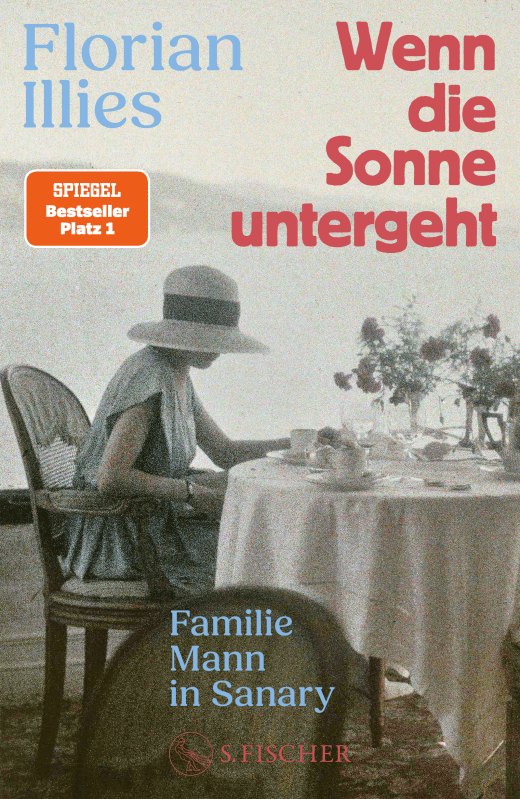
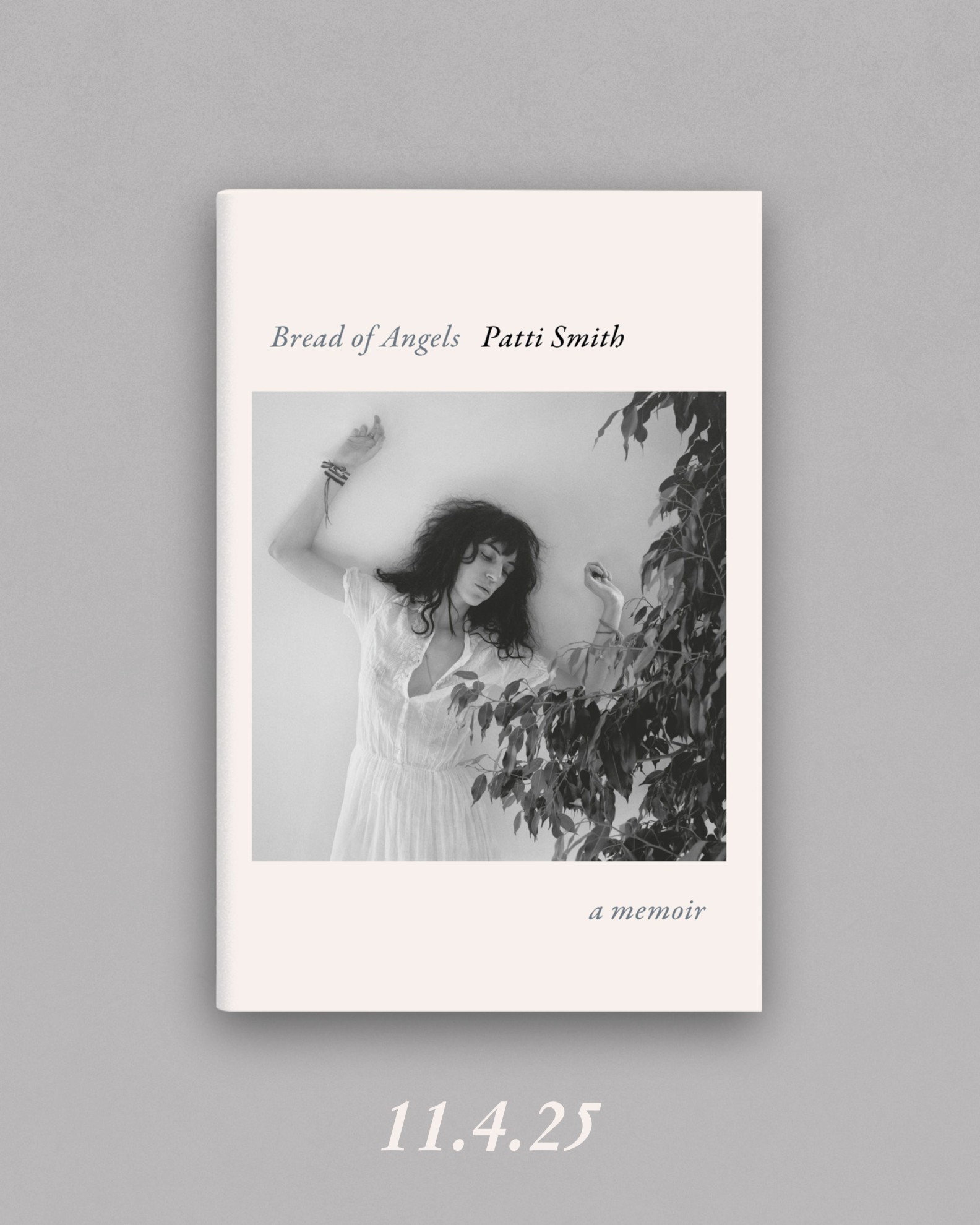
Images via S Fischer Verlage and Patti Smith Substack.
Recommendations
The annotated theses of Michel Foucault have been found by French researchers. It’s about his 1961 doctoral thesis “Folie et déraison: histoire de l'expérience de la folie à l'âge classique”, and the complementary one,“Introduction à l'anthropologie de Kant”. The thesis was published in English in 1964, with the title “Madness and Civilization: A History of Insanity in the Age of Reason”, and ended up with the more concise title “History of madness in the classical age”, after Gallimard’s edition from 1972. The book treats the meaning of madness, in cultures, laws, medicines, politics and philosophy of Europe, from the Middle Ages until the end of the 18th century. You can read the thesis in the French original here.
In the 1980s, Michel Foucault was a visiting professor at the University of California, Berkeley. During those years, he delivered lectures on truth, subjectivity, biopolitics, and more. The UC Berkeley has an extensive audio archive with lecture recordings.
Marc Bloch and his wife, Simonne Vidal, have been interred in the Panthéon of France. Marc Bloch was a French historian, a founding member of the Annales School, and a member of the French Resistance in WWII. His wife was his research assistant and volunteered as a nurse during the war.
The historian Karin Wulf writes about the importance of citing sources both in print and online. From her post: “In a world of swirling information, it can be hard to know how to assess what someone is saying. That’s true in traditional text media as well as online, and it’s also true that someone can link a source but be distorting or misunderstanding that source in a way that makes their post misleading. But in general, the more information you have about who is doing the work to share information, and about the basis for that information, the better. It’s just good information hygiene.”
Always wondered how The Lord of the Rings created special effects? This explainer presents the forced perspective used by the creators to make Gandalf appear bigger than the hobbits from The Shire. From the article: “forced perspective is a technique well-known in photography. It’s an optical illusion to make subjects appear larger or smaller than they actually are.”
Let’s work together
When I can help you or your team, get in touch here. I do:
Information and content architecture: Audit and solve problems for websites, communities and services, and design solutions and processes that work for the long term.
Training and workshops: presentations, hands-on workshops, one-on-one mentoring in information architecture, knowledge management, marketing strategy and community design.
Free (!) coffee consultations: I keep 2 hours a week in my calendar free for people I don’t work with, to talk about their most important topics.
Main image via National Gallery of Art — Unknown 19th Century — A Painter and Visitors in a Studio C. 1835. Oil on paper on canvas, 35 x 43 cm. Credit: Courtesy National Gallery of Art, Washington.
Tagged
You might also like
-
Miscellanea no 3: About walled gardens, digital gardens and the Web

- Written by Daniel Prindii
- Published on
-
On new European social media platforms, reading and Chat Control
- Written by Daniel Prindii
- Published on


